
Website Hacked? Causes, Risks and What You Must Do Immediately
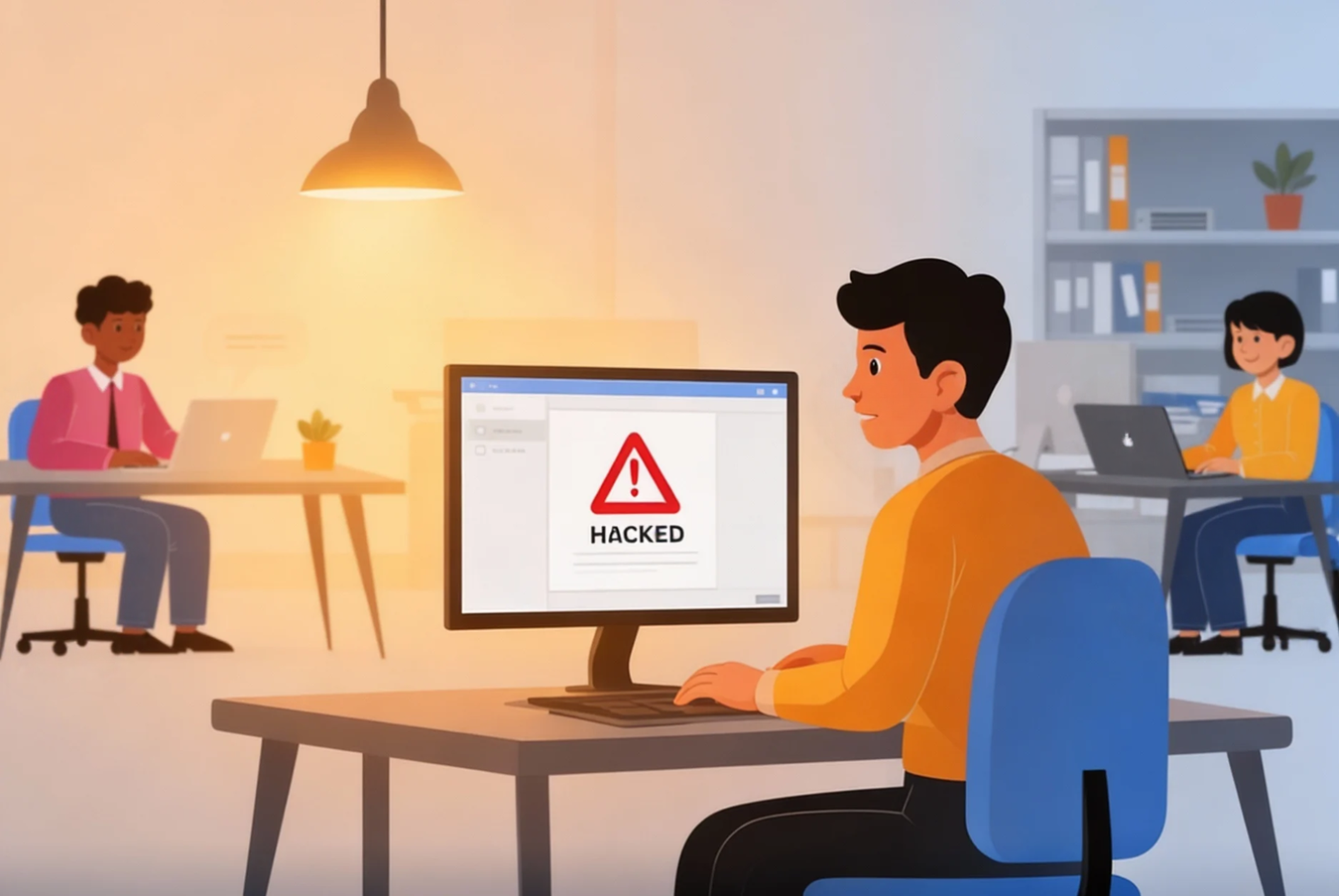
It always feels unexpected.
Your website is online.
Your business is running.
And then something feels off.
A customer reports a strange warning.
Google flags your site as unsafe.
Or you notice pages that were changed without your consent.
That’s the moment it hits you:
your website has been hacked.
The first question is almost always the same:
“Who would do this?”
Closely followed by:
“Why my website?”
To properly fix the problem — and prevent it from happening again — you first need to understand who is behind website hacks and what their real motives are.
What Does It Mean When a Website Is Hacked?
A website is hacked when unauthorized access is gained to files, systems or data — most often through automated bots that exploit known vulnerabilities for specific goals.
Important to understand:
in most cases, no human is manually targeting your website.
Who Is Really Behind Website Hacks?
1. Automated Bots (The Largest Group)
The vast majority of website hacks are carried out by automated bots.
These are:
-
programs created by people
-
running continuously
-
scanning millions of websites every day
Their mission is simple:
find vulnerabilities and exploit them as fast as possible.
Bots typically:
-
test weak passwords
-
scan for outdated plugins
-
exploit known CMS vulnerabilities
-
operate without human supervision
Your website is usually not personally targeted — it is simply discovered.
2. Cybercriminals With Financial Motives
Behind these bots are individuals or groups with clear objectives:
-
spreading malware
-
phishing campaigns
-
spam distribution
-
ransomware deployment
-
selling stolen data
They profit from:
-
infected visitors
-
compromised accounts
-
abuse of your domain and reputation
3. Opportunistic Attackers
Some attacks are purely opportunistic:
-
“if it’s open, take it”
-
no distinction between small or large websites
Smaller businesses are often more attractive, because they tend to have weaker defenses.
Why Is Your Website Being Targeted?
Not because you’re important —
but because you’re vulnerable.
Common reasons include:
-
outdated software
-
lack of monitoring
-
default configurations
-
weak or reused passwords
-
missing security layers
To bots, your website is:
one of millions of potential entry points.
Which Businesses Are Most at Risk?
Ironically, the most vulnerable are often:
-
small to mid-sized businesses
-
professional organizations without internal IT teams
-
websites that “have always worked fine”
Security usually becomes a priority after something goes wrong.
What Are the Real Risks for Your Business?
A hacked website is not a technical inconvenience — it is a business threat.
1. Loss of Trust
Visitors leave when they see warnings or suspicious content.
2. SEO Damage
Search engines may:
-
lower rankings
-
block pages
-
mark your domain as unsafe
Recovery can take weeks or months.
3. Data Misuse
Forms, credentials and email addresses may be exploited.
4. Financial Impact
Lost revenue, recovery costs and reputational damage add up quickly.
5. Legal Consequences
Data breaches may trigger mandatory reporting and fines.
What Must You Do Immediately After a Hack?
1. Limit Further Damage
Temporarily take the website offline if needed.
2. Change All Access Credentials
Including:
-
CMS accounts
-
hosting
-
databases
-
email
3. Create a Full Backup
Even of the infected version — useful for investigation.
4. Identify the Root Cause
Without this, the attack will likely return.
5. Remove Malware Thoroughly
Surface-level cleanup is rarely sufficient.
6. Update Everything
CMS, plugins, themes and server components.
Why Quick Fixes Often Fail
Many businesses:
-
restore an old backup
-
remove visible damage
-
hope the problem is solved
But bots return.
And they exploit the same vulnerability again.
Without structural security, your website remains exposed.
How IT bugsolutions Protects Websites Structurally
IT bugsolutions focuses on prevention, not just recovery.
Our approach includes:
• Deep Security Analysis
We identify how and why the breach occurred.
• Complete Cleanup and Recovery
Including malware removal and code verification.
• Structural Protection
Firewalls, monitoring and layered security.
• Continuous Monitoring
So automated attacks don’t get a second chance.
With IT bugsolutions, your website stops being an easy target.
Conclusion
Website hacks are rarely personal.
But their impact always is.
Most attacks:
-
are automated
-
target vulnerabilities
-
affect insufficiently protected websites
Understanding who is behind the attacks and why is the first step toward proper protection.
Want security based on certainty instead of luck? IT bugsolutions helps keep your website safe — today and tomorrow.
FAQ
Are only large companies targeted?
No. Smaller and mid-sized websites are often easier targets.
Are bots more dangerous than humans?
Yes — because they operate continuously, automatically and at scale.
Can a hack stop on its own?
No. Unauthorized access often remains active without intervention.
Is a security plugin enough?
No. Effective security requires a layered approach.
Can IT bugsolutions help prevent future attacks?
Absolutely. Prevention is always more effective than recovery.
Published by IT bugsolutions on: Jan 16, 2026
IT issue? We fix it quickly.
Describe your IT problem and our specialists will get back to you with a clear, practical solution.
CONTACT USRecent posts
- Webshop Crashing? Every Minute Costs You Revenue
- Checkout Problems in Your Webshop? Here’s How to Prevent Revenue Loss
- My App Is Crashing — What Must I Do Immediately?
- 500 Server Error on Your Website? Causes, Risks and Solutions
- Is Your Website Down? What You Must Do Immediately
- Help! 404 Error on Your Website – What Does It Mean and How Do You Fix It?